

Signal or Noise? Reading Economic Nationalism in the Era of Mass Geopolitics
Trinity College Dublin
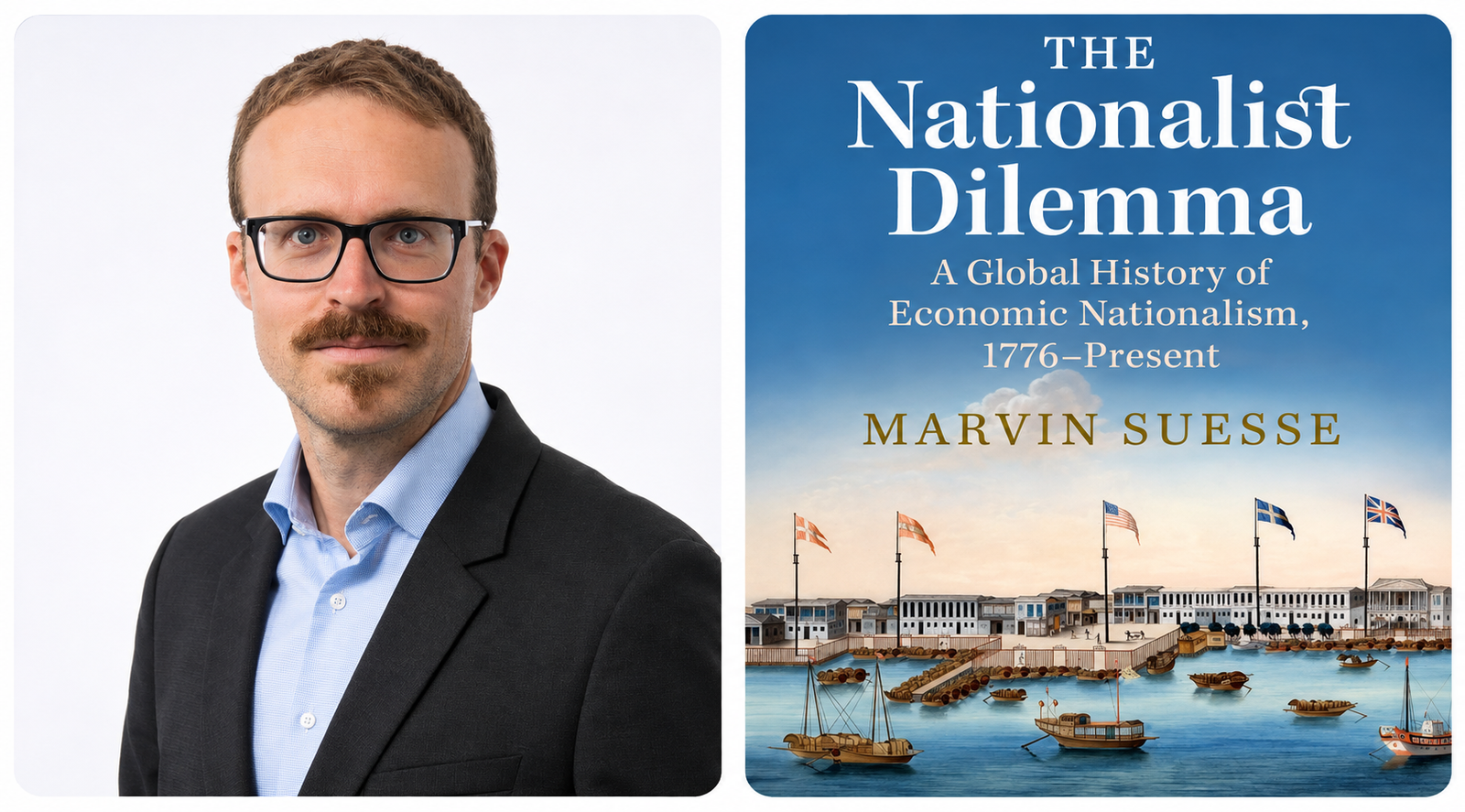
Today’s students of nationalism are confronted with a problem: nationalism seems everywhere, and politicians, wonks, and activists are constantly legislating, writing, talking, and posting on topics ranging from “manufacturing sovereignty,” “strategic autonomy,” “domestic jobs,” and “national firms” in real time. Among all the noise, it can be easy to lose sight of what the particular “nationalist” feature of these policies might be. This matters; if every economic action or idea is “economic nationalism,” then the word loses meaning and ceases to explain anything in particular.
I wrote “The Nationalist Dilemma: A Global History of Economic Nationalism, 1776-present” (Cambridge University Press, 2023), as an attempt to extract the signal from the noise. In the book I explore the essence of what makes economic nationalism distinctive both as a body of thought and as a set of policies. In order to do this, I zoom out from current discourse and take a long-run view, examining 30 case studies drawn from regions around the world, chronologically spread from the late eighteenth-century revolutions to today’s “America First”. By situating each case in a comparative perspective that puts it in dialogue with cases in other countries or historical periods, I seek to isolate what really makes nationalist thinking on economic affairs different. What do economic nationalists really want?
There are two main patterns that emerge. The first is a classic one: economic nationalists care about isolating their nation from global economic interactions. Economic nationalists want to build an independent economy, one that promotes domestic trade and investment, and one that privileges employment and asset ownership by compatriots. If nationalists have access to the corridors of power, as many do today, they will use tariffs, migration restrictions, and regulations to restrict economic contact with those seen as foreigners, or with particular groups of foreigners. I call this aim the isolationist motive.
The second pattern is more frequently overlooked, but as important. It stems from the fact that economic nationalists often seek to implement measures increasing the “wealth and power” of their nation. The idea is simple, but consequential: the economy becomes “national” not by virtue of ownership, but because it becomes the engine driving national modernisation, progress, and possibly military enlargement. Nationalists pursuing these aims may opt for a variety of policies, but historically these have often included support of technological advancement, infrastructure projects, and industrial policies. I call this the expansionist motive.
The problem for nationalists comes when both motives are pursued together. Historically, many policymakers who wished to obtain the latest knowhow, capital or intermediates for their projects of national rejuvenation found that they needed to turn to importing technologies, specialists or raw materials from abroad. Yet this was exactly what isolation wanted to avoid. Nationalists therefore find themselves in an uncomfortable tension between both motives. Sometimes, this leads to the adoption of compromise solutions that try to balance both objectives. For example, joint venture requirements as they have been used by Chinese governments since the 1980s and 1990s can be used to, on the one hand, attract foreign firms to invest and share knowledge and capital, while on the other hand retaining a certain share of local ownership and control. In other cases, the tension cannot be mediated easily, and nationalist policy making flips between different targets. Witness Donald Trump’s love of using tariffs, while also shying away from the costs of doing so. Much of the ‘noise’ we witness in day-to-day nationalist rhetoric stems from the intrinsic tension inherent in its proponents chasing two goals at once.
The resulting dilemma helps to explain why states may simultaneously court investment by foreign corporations and subsidise domestic champions, why they may impose local ownership requirements while also fostering cross-border technology flows, and why they may push for the import of critical raw materials while jealously taxing imports of steel. Ultimately, the dilemma helps to explain the peculiar position of modern corporations at the intersection of global economic integration and national political ambitions. Governments see corporations as both indispensable agents of economic expansion and as potential targets for nationalist regulation. The nationalist dilemma is therefore not just a dilemma for states: it is increasingly the defining predicament of corporations operating across borders.
About the author: