
Featured Research
Featured Book
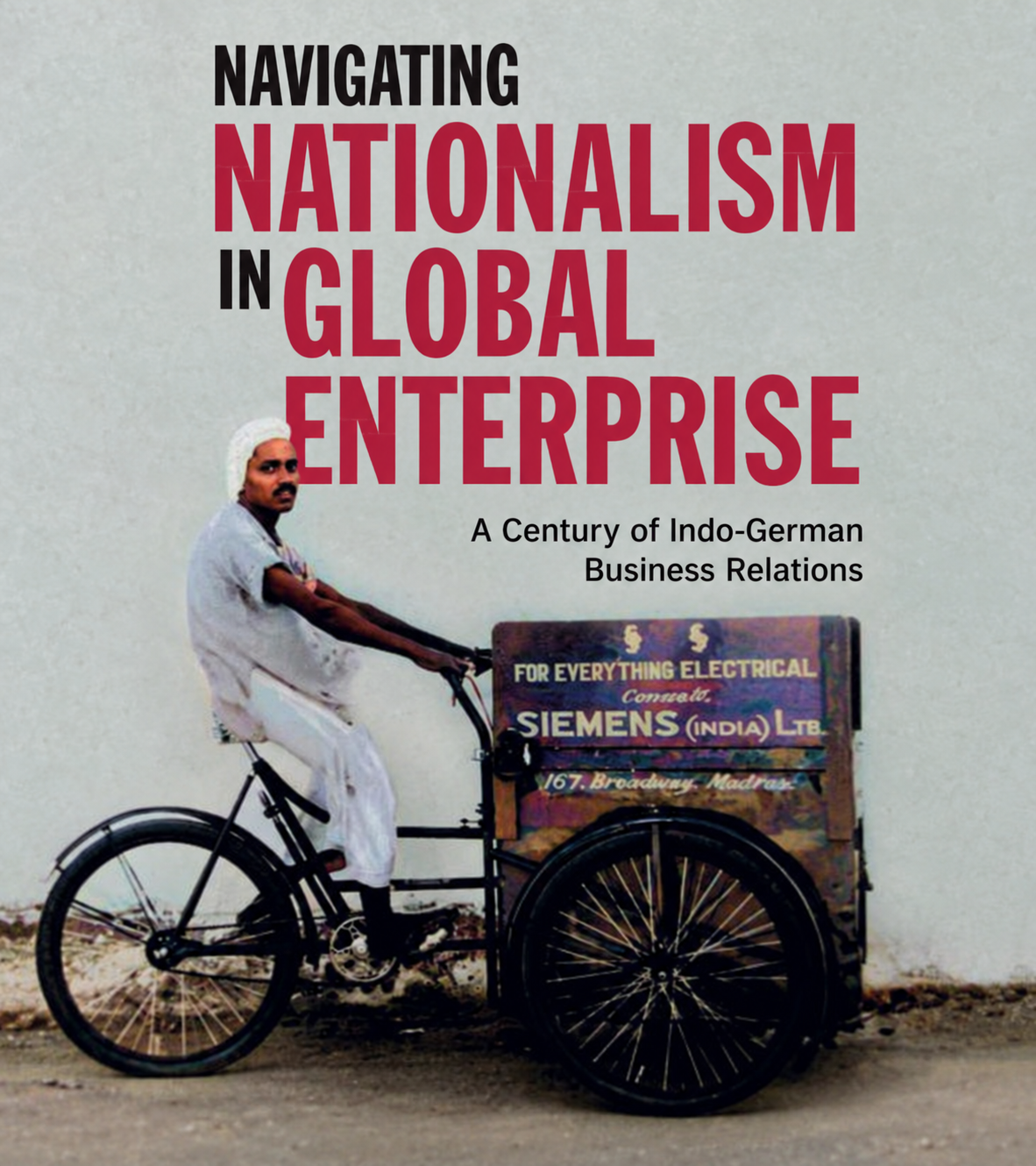
Navigating Nationalism in Global Enterprise
A Century of Indo-German Business Relations
How do multinational enterprises navigate nationalism and changing geopolitical relationships? Drawing on a century of German business in India, Christina Lubinski examines how historically formed understandings of nations shape international business strategies, and how multinational corporations participate in defining relationships between nations.
Research Library
Boycotts and Nationalism Movement
We study the impact of nationalism and interstate frictions on international economic relations by analyzing market reaction to adverse shocks to Sino-Japanese relations in 2005 and 2010. Japanese com
… See More
Multinational firms face challenges as geopolitical tensions are rising when stakeholders may have divergent views on contentious issues. Sharply different attitudes toward the proposed extradition la
… See More
A growing body of research has revealed that firms leverage nationalism in their strategies. However, it is unclear why some firms are more likely to do so than others. This paper uses institutional t
… See More
Defining and Measuring Nationalism
This article develops and evaluates measures designed to distinguish different forms of attachment to the nation, particularly patriotism and nationalism. The authors argue that national attachment is
… See More
While nationalistic political rhetoric has become a critical concern for international business, the research in this area has lagged because of the unavailability of a representative measure. In this
… See More
In this article, we develop a computational measure of firm-level rhetorical nationalism. We first review the literature and develop a four-dimensional theoretical framework of nationalism relevant to
… See More
Media and Digital Nationalism
How do citizens in authoritarian contexts interpret nationalist messages embedded in everyday life? While research shows that nationalism is reproduced through routine practices, less is known about h
… See More
This study examines how nationalistic messages and sentiments propagate on
Chinese social media, focusing on interactions between celebrities and fans.
Analyzing more than 8 million Weibo microblogs
… See More
Nationalism and Business History
Nationalists think about the economy, and this thinking matters once they hold political power. Some seek to limit global exchange while others prioritize economic development, and the tension between
… See More
Much organizational identity research has grappled with the question of identity emergence or change. Yet the question of identity endurance is equally puzzling. Relying primarily on an analysis of 30
… See More
For well over a century, the United Fruit Company (UFCO) has been the most vilified multinational corporation operating in Latin America. Criticism of the UFCO has been widespread, ranging from politi
… See More
The US multinational United Fruit Company has been considered the quintessential representative of American imperialism in Central America. Not only did the company enjoy enormous privileges in that r
… See More
We explore multinational strategy formation in the context of rising economic nationalism. Specifically, we examine how firms develop strategies to capitalize on the historical and aspirational attrib
… See More
Nationalism and International Business
This study develops a theory of host country sentiments to explain how social sentiments shape the legitimacy and outcomes of cross-border acquisitions. Focusing on acquisitions by emerging-market fir
… See More
This study examines economic nationalism in European mergers and acquisitions between 1997 and 2006. Using hand-collected data, the authors investigate how governments favor domestic ownership over fo
… See More
We extend the cross-border strategic alliance knowledge base by introducing dyad-specific antagonism (animosity between nation pairs) and hold that the formation and the type of firm-level cross-borde
… See More
Our work examines the impact of country-dyadic military conflicts on market reaction to cross-border acquisitions (CBAs). Building on intergroup relations research, we theorize that country-dyadic mil
… See More
This paper explores why and how nation-dyadic history impacts aggregated firm decisions involving cross-border activities (acquisitions, joint ventures, and alliances). We contextualize history and il
… See More
We examine how nationalism influences governance choice in cross-border collaborations. While nationalism has historically been within the purview of political scientists, we demonstrate its relevance
… See More
Under strict scrutiny of public governance primed by international relation tensions, geopolitics, and the rise of social movements and public activism in the globalized economy, public sentiment is e
… See More
Current techno-nationalism presents new risks in international business, amplifying volatility, uncertainty, and complexity for multinational enterprises (MNEs). This study explains how today’s tech
… See More
Nationalism and Multinational Corporations
This study examines the national and organizational identities of host-country managers working in multinational enterprise subsidiaries. The authors distinguish four identity profiles: diffuse, natio
… See More
This article develops a critical discursive approach to national identity in multinational corporations. It shifts attention from static cultural differences to processes of national identification an
… See More
International business scholars have recognized the impact of political and economic nationalism on the multinational enterprise (MNE). This article complements these approaches by highlighting the so
… See More
Navigating Nationalism in Global Enterprise examines how multinational enterprises respond to nationalism and political change through a century of Indo-German business relations. Drawing on extensive
… See More
Nationalism and Nonmarket Strategy
Geopolitical concerns are one of the important factors influencing multinational enterprise (MNE) location choices. This is particularly true for globalizing state-owned enterprises (SOEs) because of
… See More
We explore multinational strategy formation in the context of rising economic nationalism. Specifically, we examine how firms develop strategies to capitalize on the historical and aspirational attrib
… See More
Economic nationalism refers to government actions that enhance national interest by protecting and aiding domestic firms at the expense of foreign ones. While prior research has highlighted discrimina
… See More
Nationalism and Organizational Studies
Using archival evidence covering Huawei’s development from 1987 to 2020, this study examines how the company employed Chinese communist political ideology in constructing and transforming its organi
… See More
This article examines how ideological imprints formed through past political experiences continue to shape entrepreneurial decision-making. Using longitudinal data on Chinese private entrepreneurs, th
… See More
The global rise of nationalism has distorted the neoliberal vision of a borderless world where the nationality of businesses would be rendered obsolete. While nationalism can promote social solidarity
… See More
Nationalism impacts contemporary organizations in diverse ways that extend beyond global politics, international relations, or economics. Based on an integrative theoretical review of nationalism in m
… See More
Nationalism, Global Talents, and Human Resources
This study investigates how multinational firms respond to restrictions on high-skilled immigration. Combining H-1B visa data with information on the activities of U.S. multinational firms, it shows t
… See More
This study examines the relationship between nationality diversity in top management teams and firm performance. Integrating upper echelons theory with institutional theory, the authors develop a mult
… See More
This study examines how nationalism produces workplace exclusion between culturally and geographically similar national groups, focusing on German employees in Austria. Drawing on two complementary s
… See More
This study examines the national and organizational identities of host-country managers working in multinational enterprise subsidiaries. The authors distinguish four identity profiles: diffuse, natio
… See More