
Redrawing the Map:
Navigating Nationalism in a Changing World
Copenhagen Business School
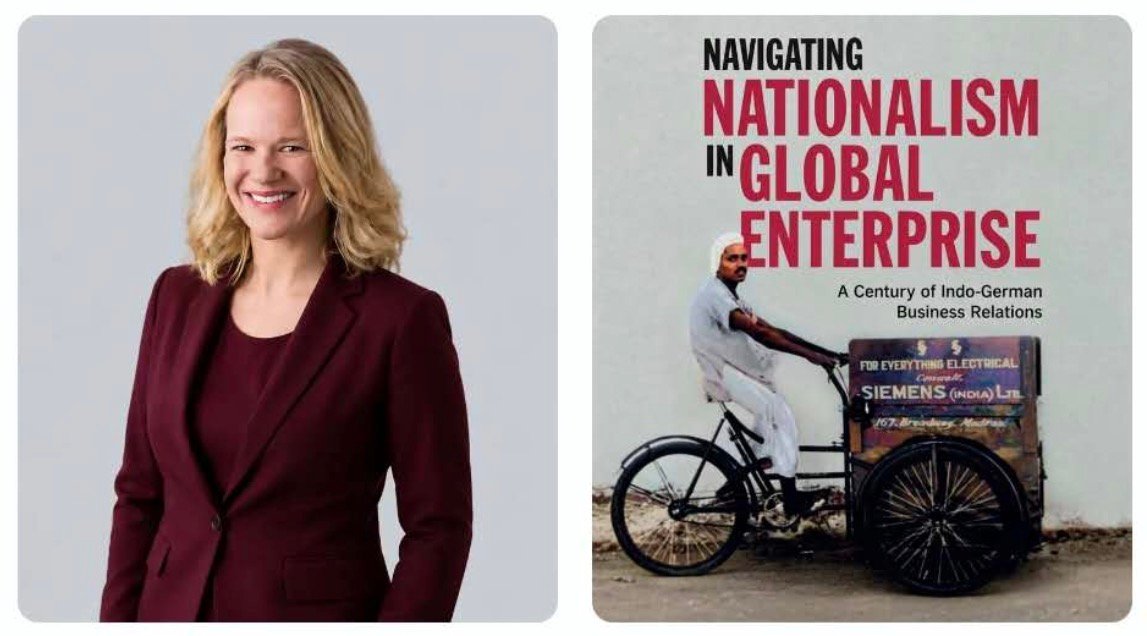
The maps we carry in our heads help us place nations as allies, rivals, or threats on the global stage. They shape how we understand and act in the world. In Navigating Nationalism in Global Enterprise (Cambridge University Press, 2023), I call these historically formed understandings “mental maps of nationalism.” They make a complex world of nations navigable by translating it into patterns of similarity and difference. But maps are products of their time. As geopolitical relationships change, the categories that once helped us understand the world may prevent us from seeing how it is being redrawn.
Many of the categories through which scholars, policymakers, and business leaders have understood international business were developed during a period of relative geopolitical stability. We became accustomed to thinking in terms of home and host countries, developed and emerging markets, political risk and institutional distance. These concepts remain useful. But they can make the world appear more stable and neatly categorized than it is. Categories such as developed and developing, ally and adversary, or partner and rival are not timeless descriptions of the world. They emerged historically and can be redrawn.
Navigating Nationalism traces such changes through a century of German business in India. The story moves across different ways of ordering the world. Initially, empire and civilization were key to understanding the world. Over time concepts, such as enemies, allies and national self-determination emerged; and eventually the developmental categories of advanced and developing economies organized what people saw. German firms did not create these changing worlds, but they learned to navigate and capitalize on them. At times, they also helped make particular relationships more salient, positioning themselves as alternatives to British imperial business, invoking Indo-German affinities, or presenting themselves as partners in India’s industrial future.
This matters because multinational corporations participate in making mental maps of nationalism strategically actionable. They can reinforce particular understandings of who is a partner, rival, model, threat or ally. In doing so, they participate in the ideological work through which the global economy is ordered.
Nations are more than territories and regulatory regimes. They are also imagined, relational and aspirational communities, connecting interpretations of the past to claims about collective futures. This is precisely what makes nationalism both durable and strategically consequential.
The resurgence of nationalism does not mean that a once-flat world has suddenly become divided. It reveals the limitations of the map we have been using. Some of the categories developed during an era of relative geopolitical stability may no longer capture the relationships taking shape around us. The challenge for scholars, policymakers and business leaders is therefore not simply to reassess individual countries, but to ask whether the mental map itself is changing: Which distinctions are losing their explanatory power? Which new affinities and rivalries are becoming salient? What imagined futures are reorganizing relationships between nations?
Understanding a changing world requires us to understand not only where nations are on the map, but how the map itself is being redrawn. The interesting question is what role multinational corporations play in redrawing it.
About the author: